Greek Mythology Explained
From Chaos to the Age of Heroes
How did the world begin? Who were the first gods, and where did the heroes come from? One gateway story that walks from Chaos and the birth of the gods, through the theft of fire, to the age of heroes and the Trojan War.
What Is Greek Myth?
How did the world begin? Who were the first gods? And where did the heroes come from? This is Greek mythology, explained from the very beginning: the birth of the world, the wars of the gods, and the age of heroes.
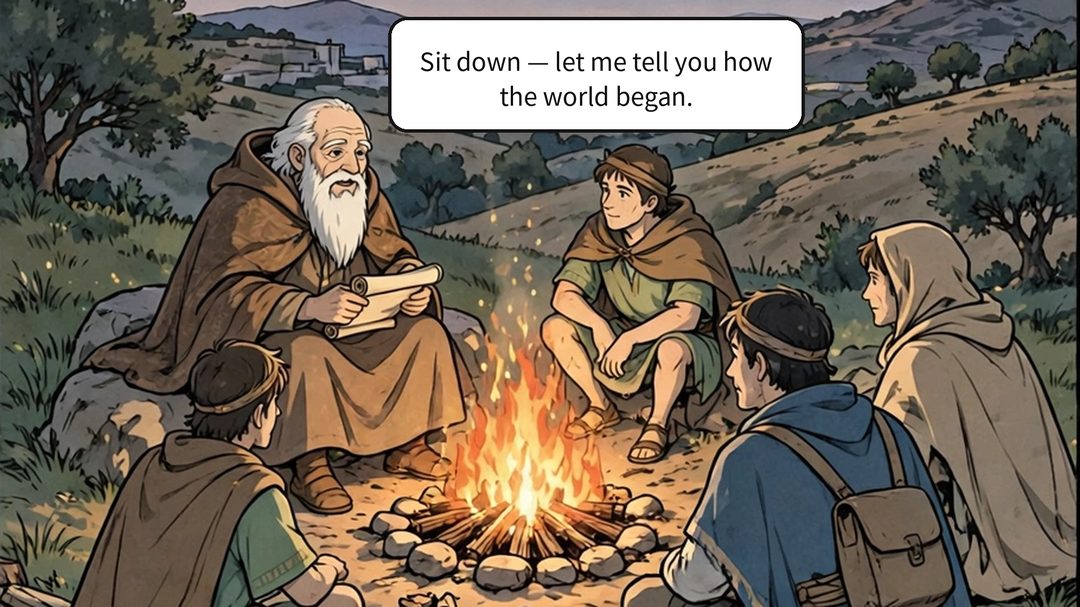
Greek myth is a vast family of stories, told aloud around fires and feasts for century after century. They began long before anyone wrote them down, passed from voice to voice across the ancient Greek world.
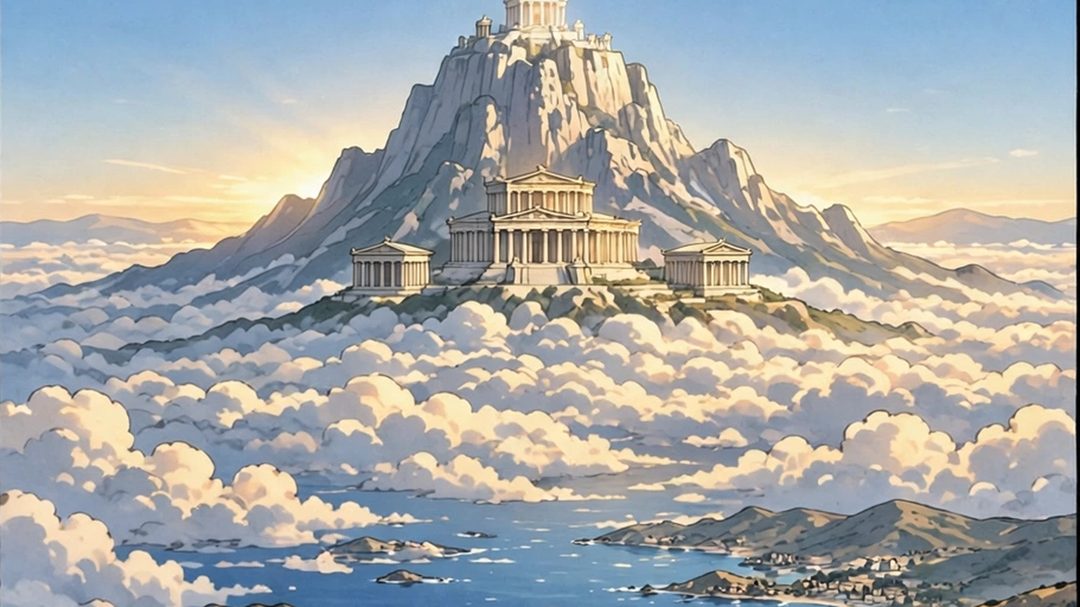
Their stage is a real landscape: the Aegean Sea, scattered islands, and one mountain, Olympus, whose peak the gods called home. But the stories begin before mountains, before gods, before there was a world at all.
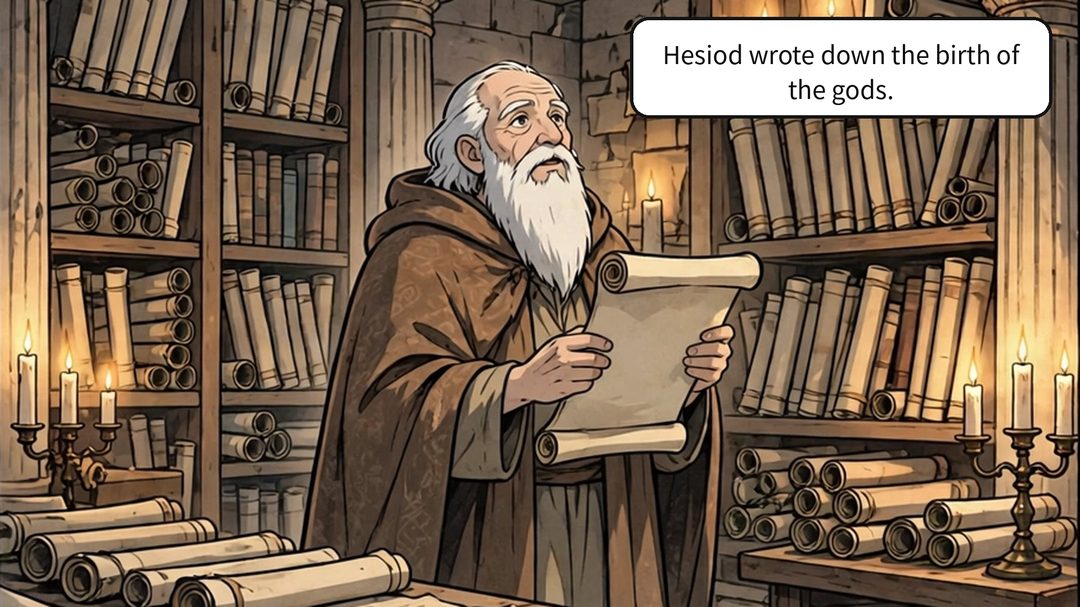
In time, great poets wrote the tales down. Hesiod sang of the birth of the gods, and how the world was made. Homer gave us the wrath of Achilles, and the long voyage of Odysseus. And later writers, like Apollodorus, gathered the whole tangled family of myths into one great library of stories.
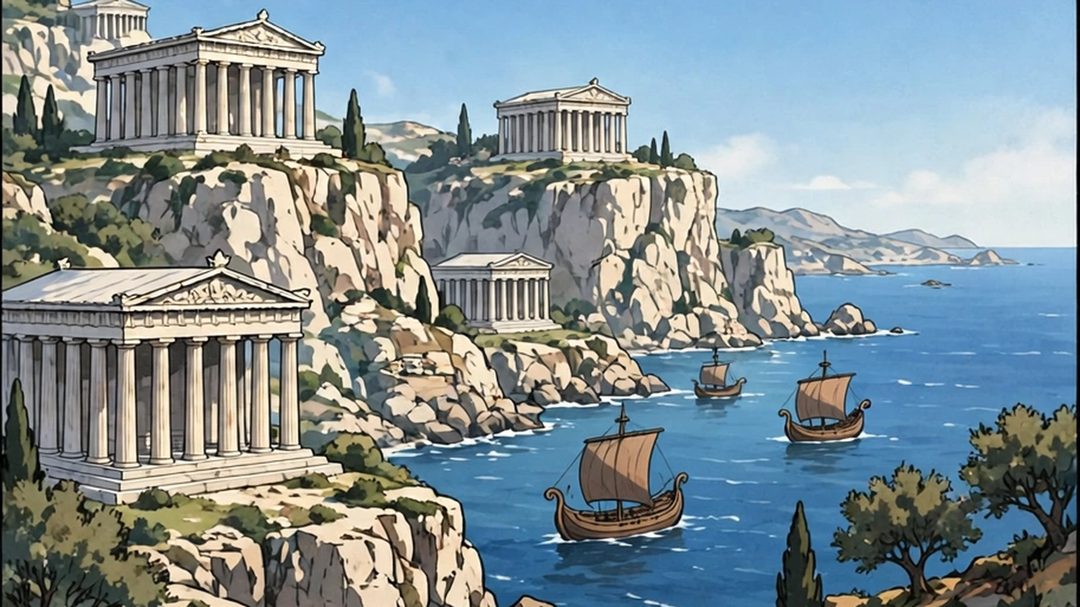
So let us go back, further than kings and cities, to the moment when there was almost nothing.
In the Beginning
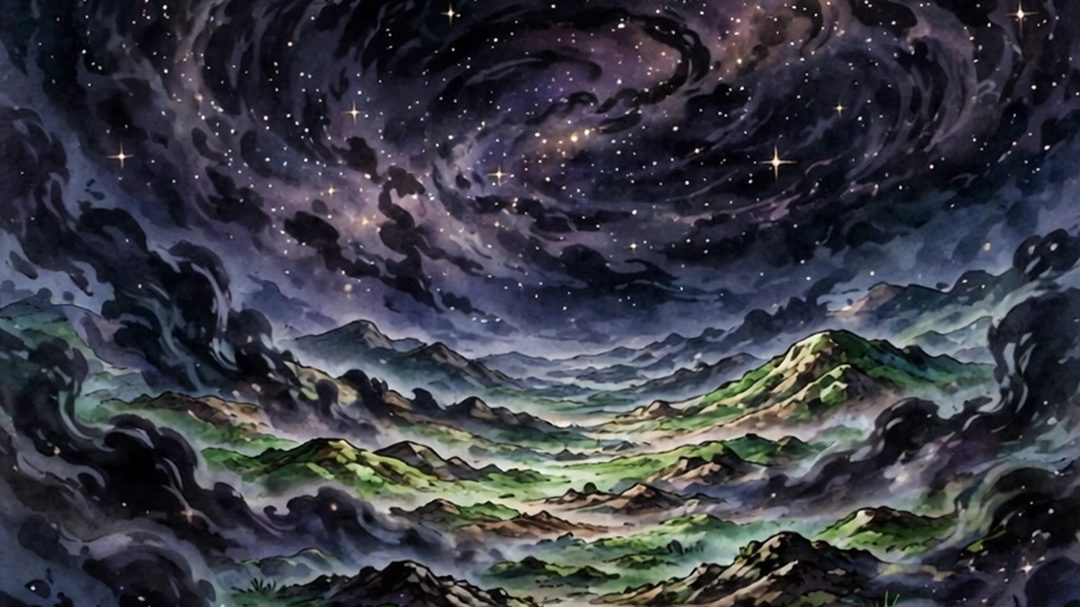
In the beginning, says Hesiod, there was Chaos: a vast, empty gap, a yawning darkness with nothing in it. Out of that emptiness came Gaia, the Earth, broad and solid, the ground on which everything would stand. With her came Tartarus, the deep pit below the world, and Eros, the pull of desire that draws all things together.
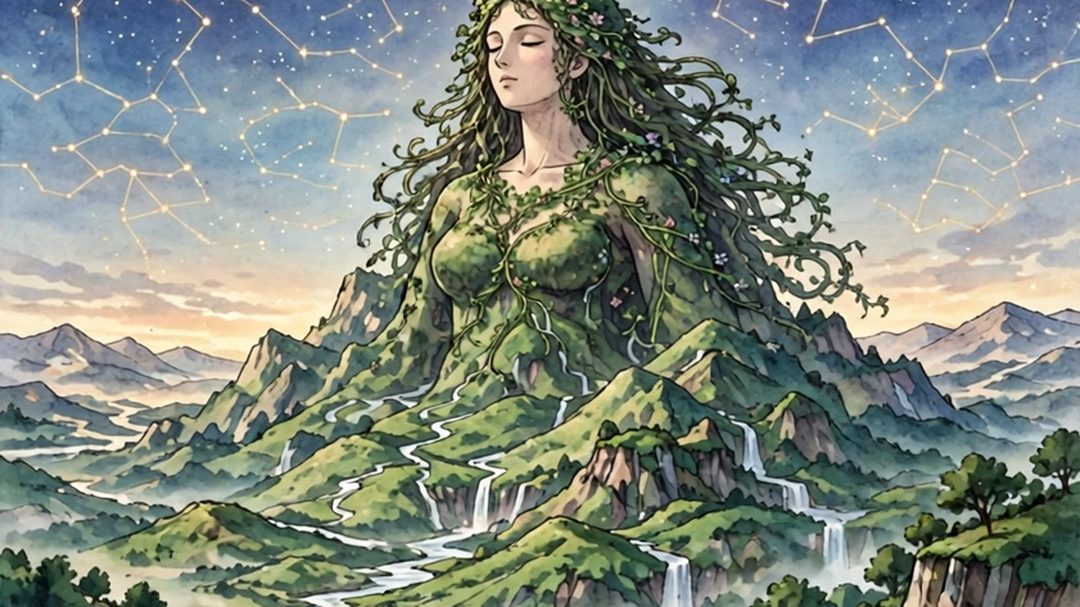
Gaia gave birth to Uranus, the starry Sky, to cover her on every side. Then Earth and Sky came together, and their children were the Titans, the oldest and greatest of all the gods. There were twelve of them. The youngest, and the most cunning, was Cronus.
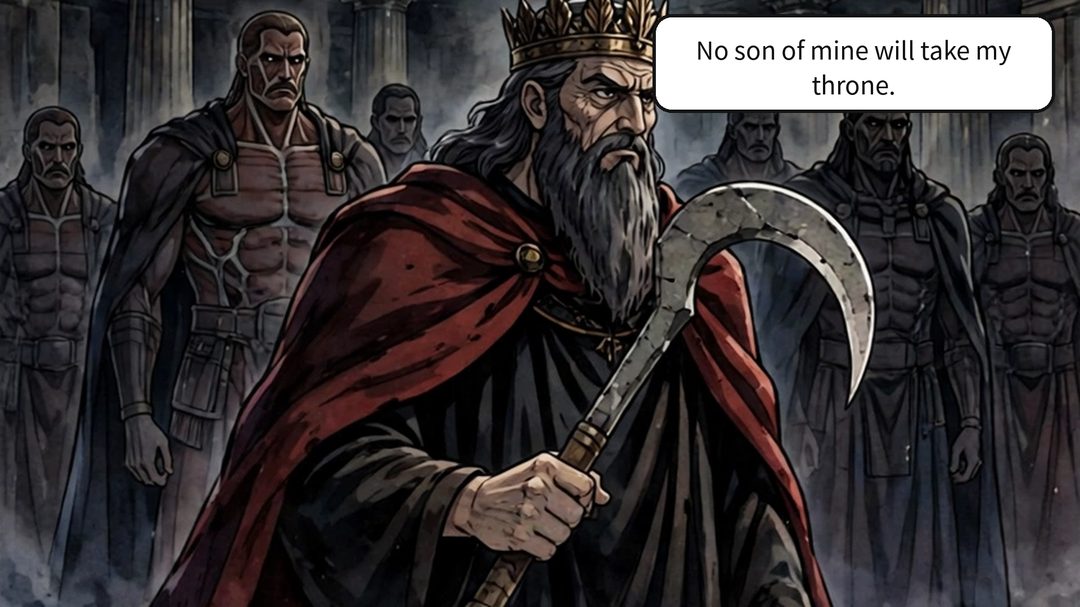
But Uranus was a cruel father. As each child was born, he hid it away inside the earth, and would not let it see the light. Gaia, groaning under the weight of her hidden children, forged a great sickle of grey stone, and asked who would punish their father. Only Cronus stepped forward. From ambush, he struck down his own father, and took the throne of the sky for himself.
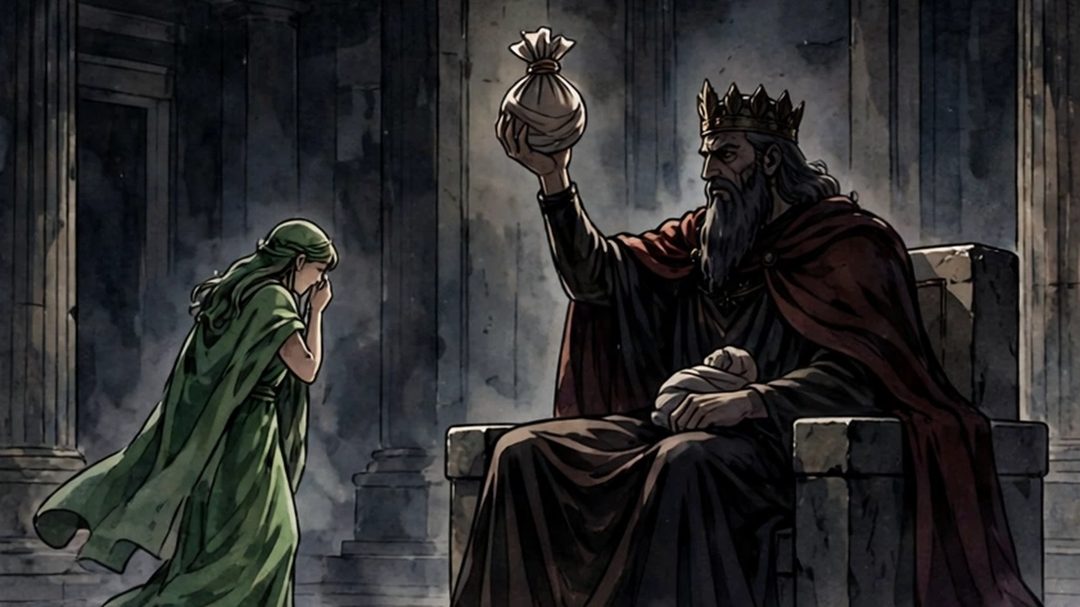
But a prophecy hung over the new king: one of his own children would do to him exactly what he had done to Uranus. So Cronus found a terrible answer. As his wife Rhea bore each child, he took the newborn, and swallowed it whole. Hestia, Demeter, Hera, Hades, Poseidon: five children, one after another, alive in the darkness inside their father.
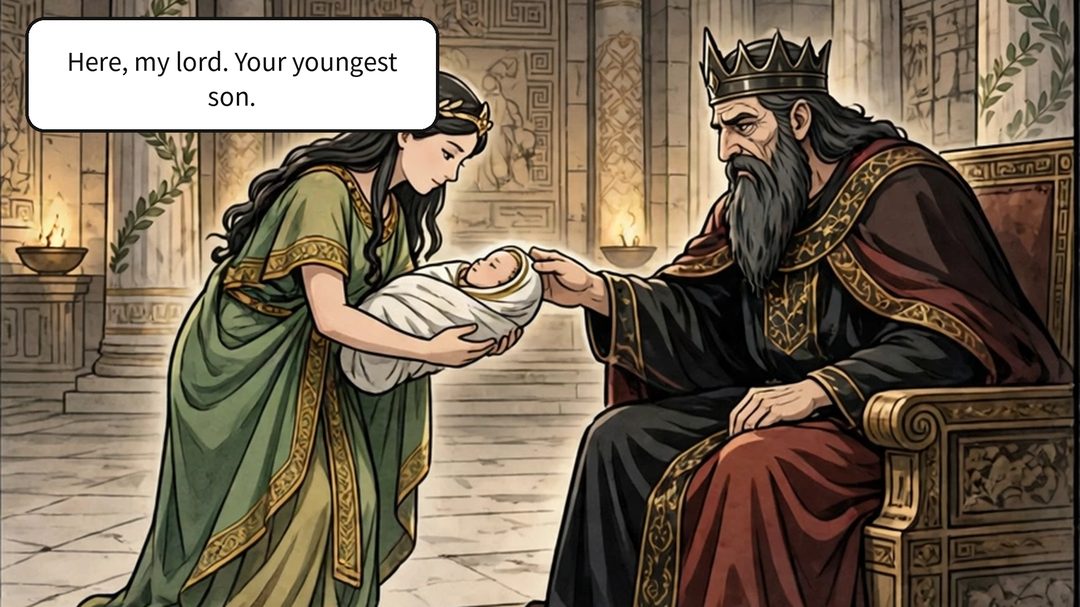
When the sixth child was on the way, Rhea could bear it no longer. She begged Earth and Sky for help. They sent her to Crete. There she gave birth in secret, in a cave on the mountainside. Then she wrapped a stone in baby's clothes, and handed it to Cronus. And the king, suspecting nothing, swallowed the stone.
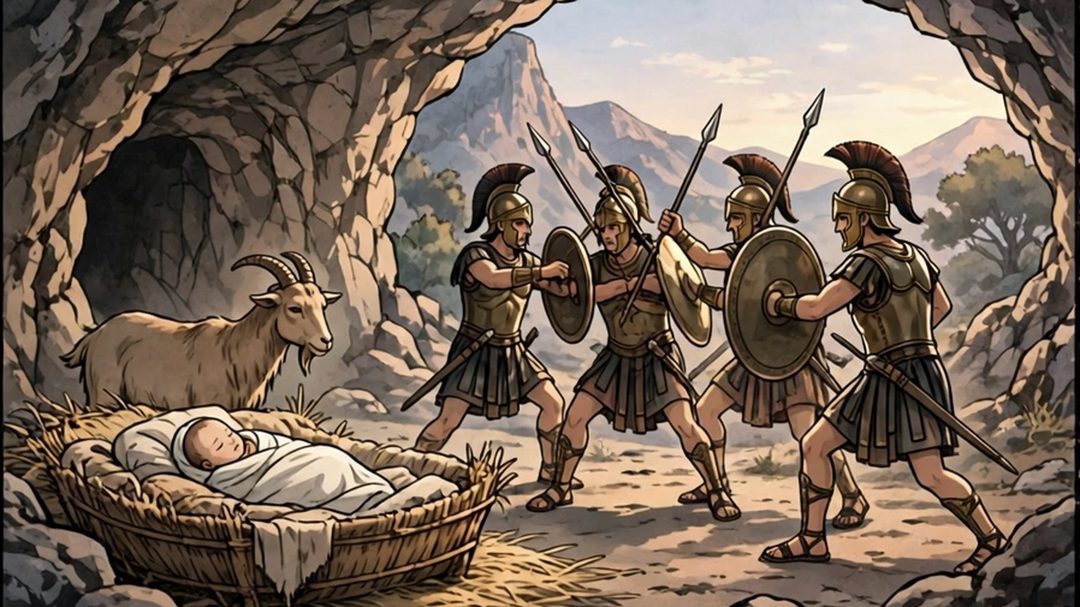
The real child, Zeus, grew up in hiding, nursed by a goat and guarded by warriors who clashed their spears on their shields, so his cries would never be heard. He grew swiftly, and he grew strong. And unlike his father, he did not forget the family swallowed in the dark.
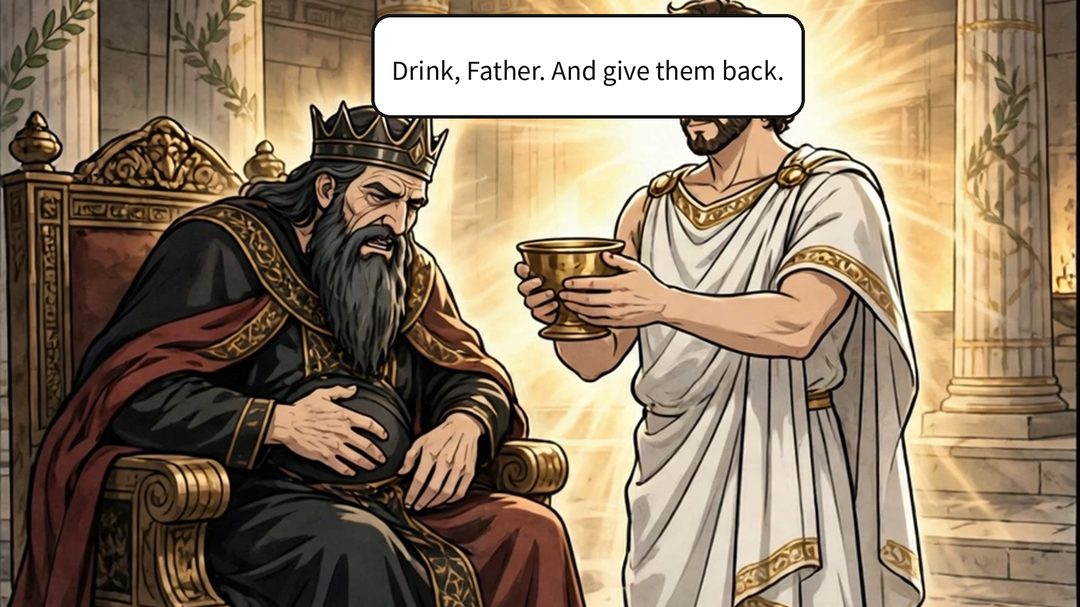
When Zeus was grown, he came back. With the help of Metis, the wisest of all, he gave his father a draught that turned his stomach inside out. Up came the stone first. Then, one by one, alive and full-grown, came the five children Cronus had swallowed. The stone itself Zeus set up at Delphi, at the center of the world, where it stood for ages as proof of the story.
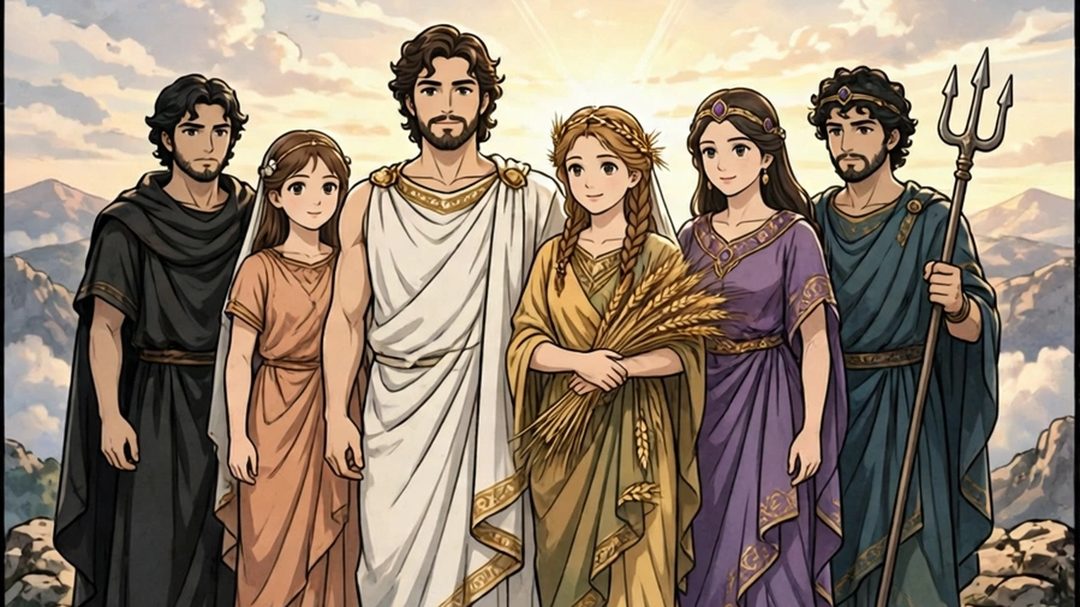
Now there were two generations of gods, and only one throne of heaven. The old order would not give way without a war. It was to be the greatest war the world has ever seen.
The Ten-Year War
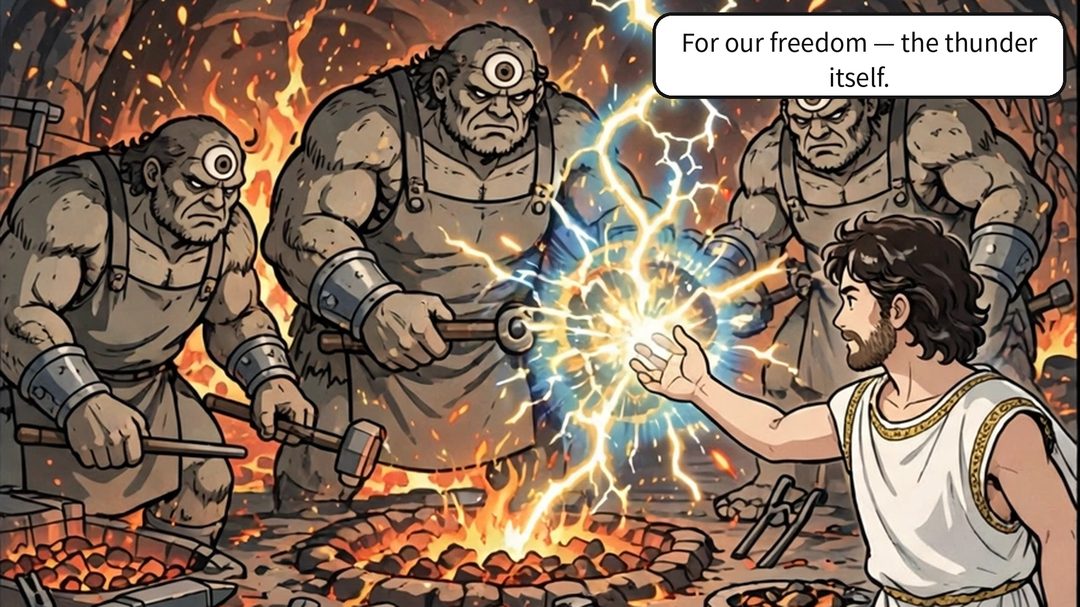
Zeus began by freeing the prisoners of the old regime: the Cyclopes, the one-eyed smiths whom Uranus had bound in chains. In gratitude, the Cyclopes forged him a weapon no god had ever held: the thunderbolt, and lightning, and the crashing thunder. To his brothers they gave gifts too: a helmet of invisibility for Hades, and for Poseidon, a trident.
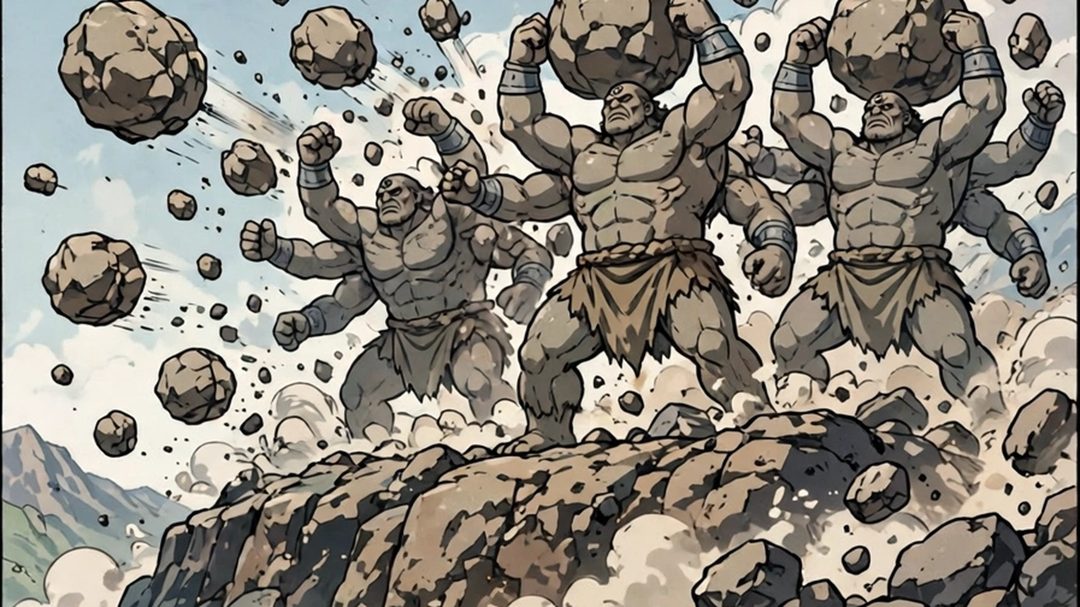
Zeus also freed the Hundred-Handers, three giants with fifty heads and a hundred arms each, buried deep beneath the earth. In battle they hurled whole boulders, three hundred at a time, burying the Titan lines under falling rock.
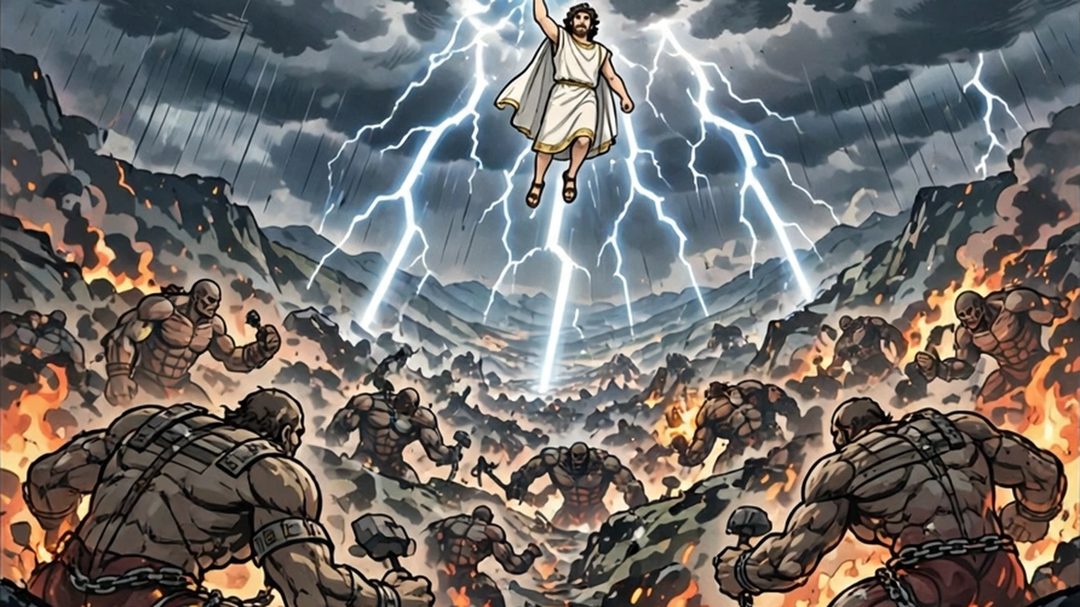
For ten full years the war raged, and neither side could win. The earth shook, the sea boiled, and the sky itself seemed to burn. But with the thunderbolt in his hand, and his new allies beside him, Zeus at last broke the power of the Titans.
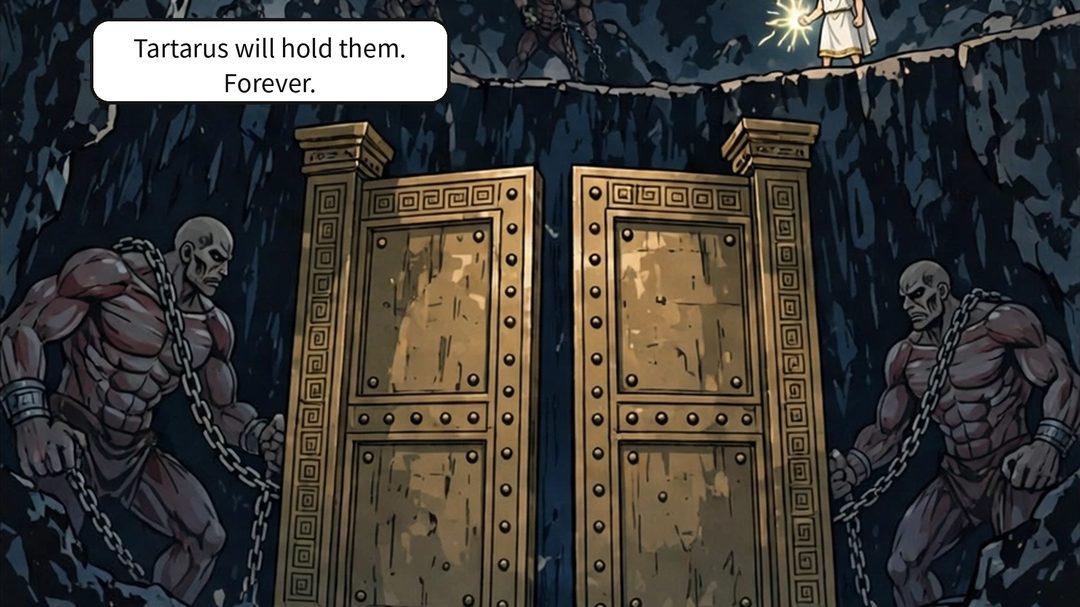
The defeated Titans were cast down into Tartarus, the pit beneath the underworld, and bound in chains of bronze. Bronze gates were closed on them, and the Hundred-Handers were set there as their eternal guards. One Titan alone was given a different fate. Atlas was made to stand at the edge of the world, and hold up the sky on his shoulders, forever.
The Order of Olympus
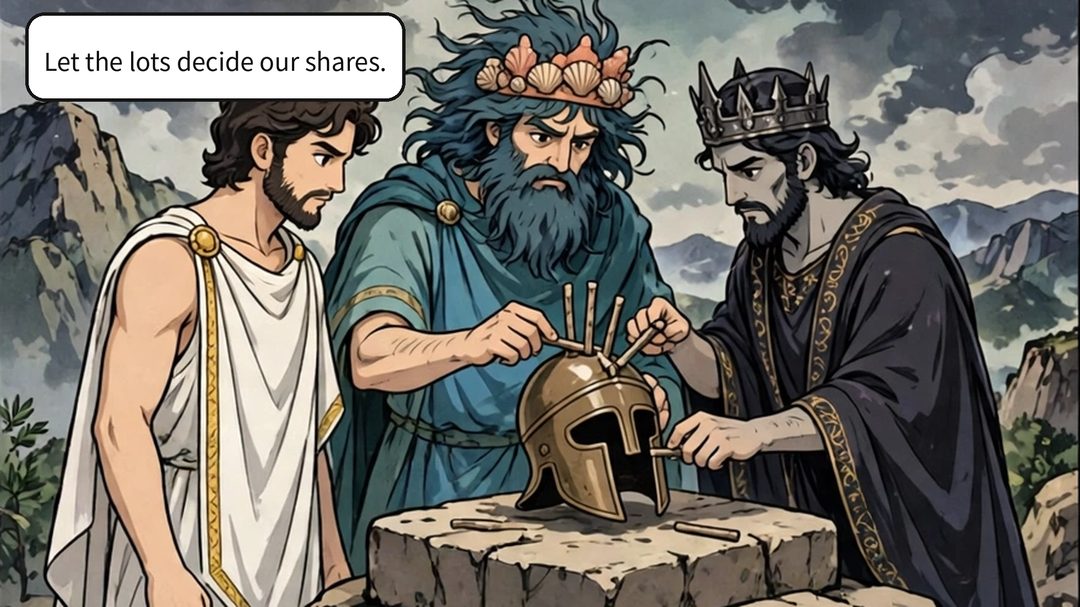
Victory won, the three brothers divided the world between them, not by seniority, but by casting lots. To Zeus fell the broad sky and the clouds. To Poseidon, the grey sea. To Hades, the murky world of the dead below. The earth and high Olympus, says Poseidon in the Iliad, they held in common, all three together.
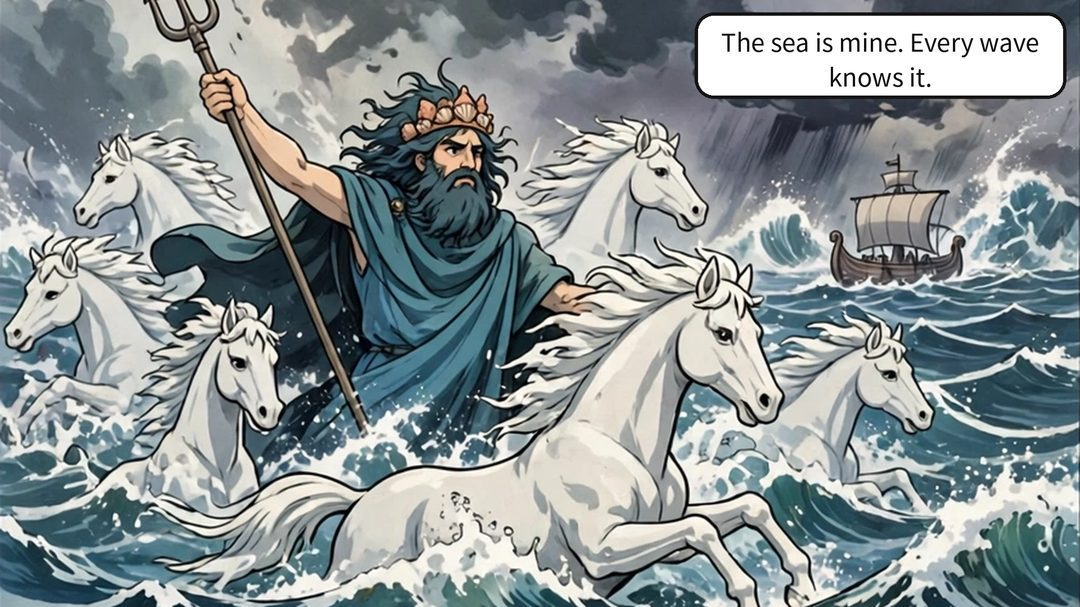
Poseidon took his trident and went down into the deep. From his palace under the waves he could shake the very earth, and the Greeks called him the Earth-Shaker. Sailors prayed to him for calm water, and feared his storms more than any other god's anger.
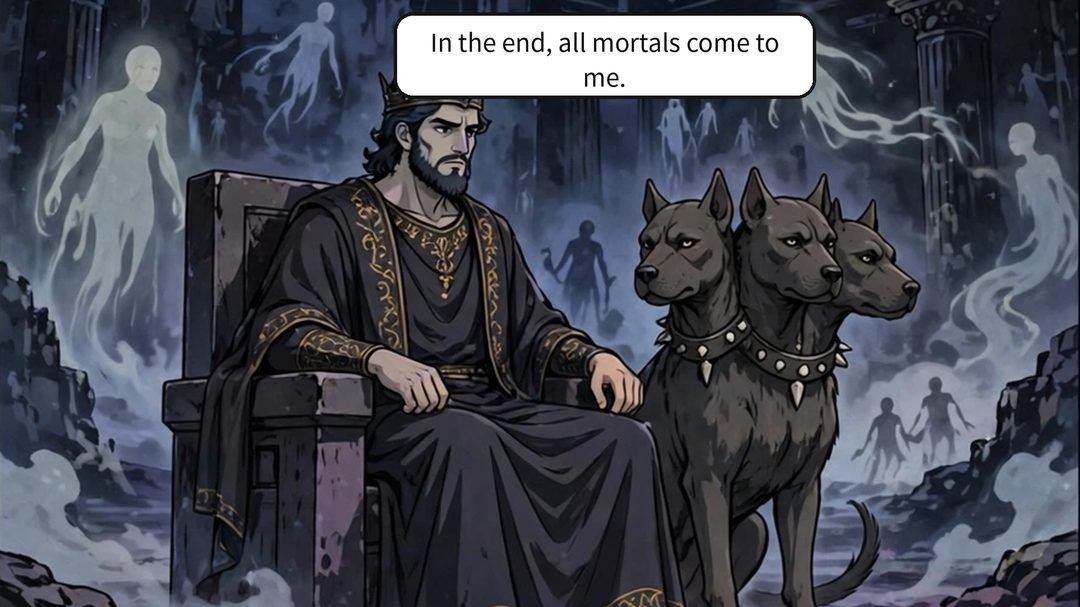
Hades ruled the dead, unseen beneath the earth, wearing the helmet that made its wearer invisible. He was not evil, only stern and just. Every mortal, king or beggar, came to his kingdom in the end, and none ever left it.
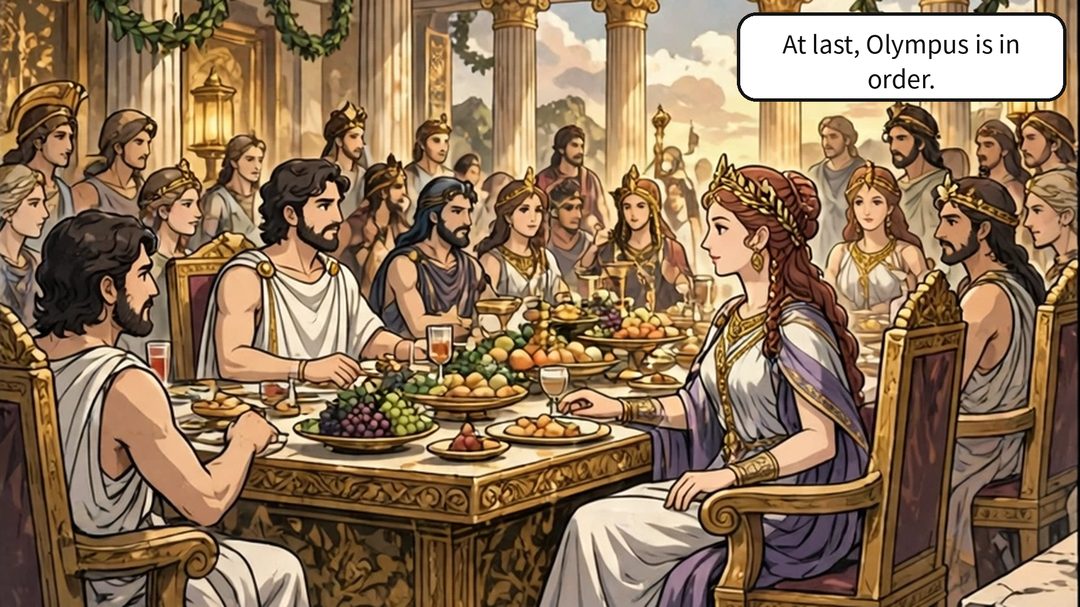
And on Olympus, Zeus ruled as king of gods and men, with Hera, his sister and wife, as queen beside him. Around their thrones gathered the great Olympians, the gods the Greeks prayed to in every city and every home.
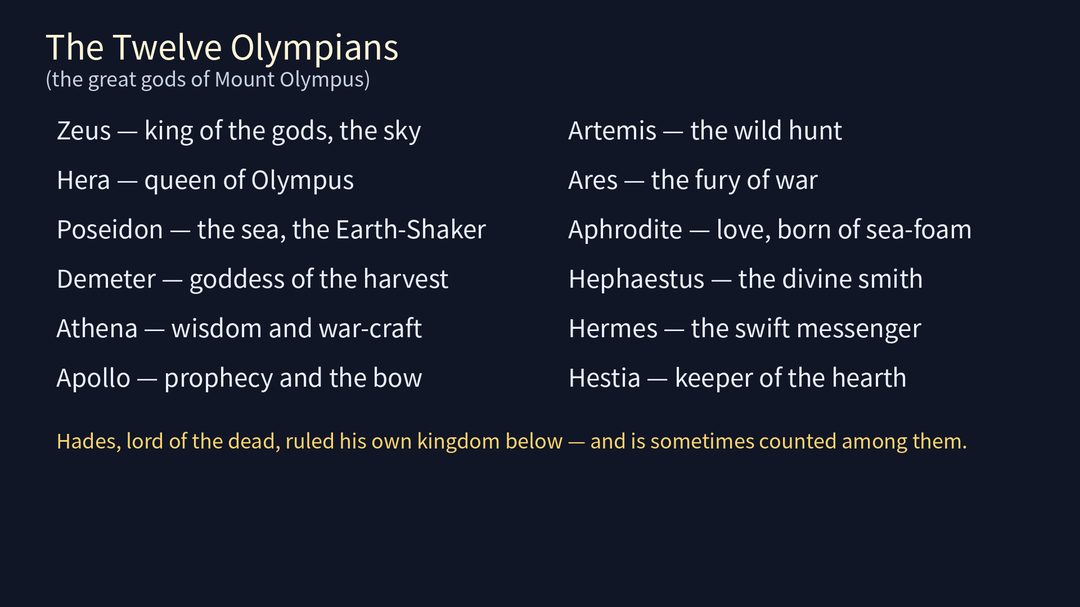
They were twelve in all: Zeus and Hera; Poseidon and Demeter, goddess of the harvest; Athena, goddess of wisdom and war-craft; Apollo of the sun, the bow, and prophecy. His sister Artemis, huntress of the wild places; Ares, the fury of war; Aphrodite, born from the sea-foam, goddess of love; Hephaestus, the lame smith of the gods. Hermes, the swift messenger with winged sandals; and Hestia, keeper of the hearth, the quietest and eldest of them all.
Hades, lord of the dead, is sometimes counted with them, though his throne stood in his own dark kingdom below.
Fire, and the Jar of Evils
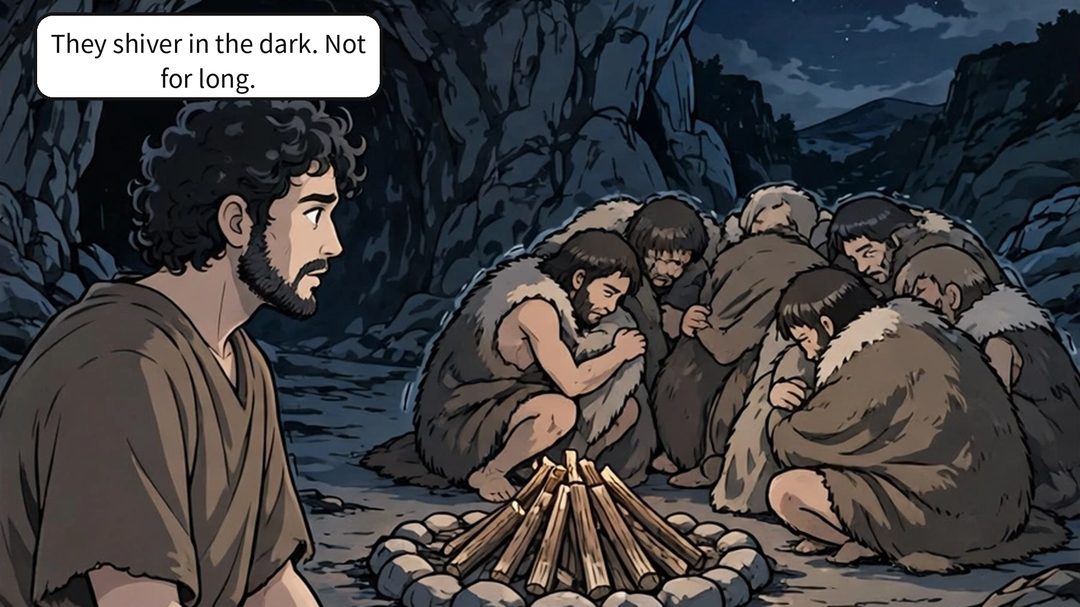
By now there were human beings on the earth. But they lived like animals in the cold and the dark, for fire belonged to the gods alone. One Titan had not fought in the war, and had kept his freedom: Prometheus, whose name means Forethought, and who loved mankind. Prometheus had shaped and championed human beings from the beginning, and he would not watch them shiver in the dark.
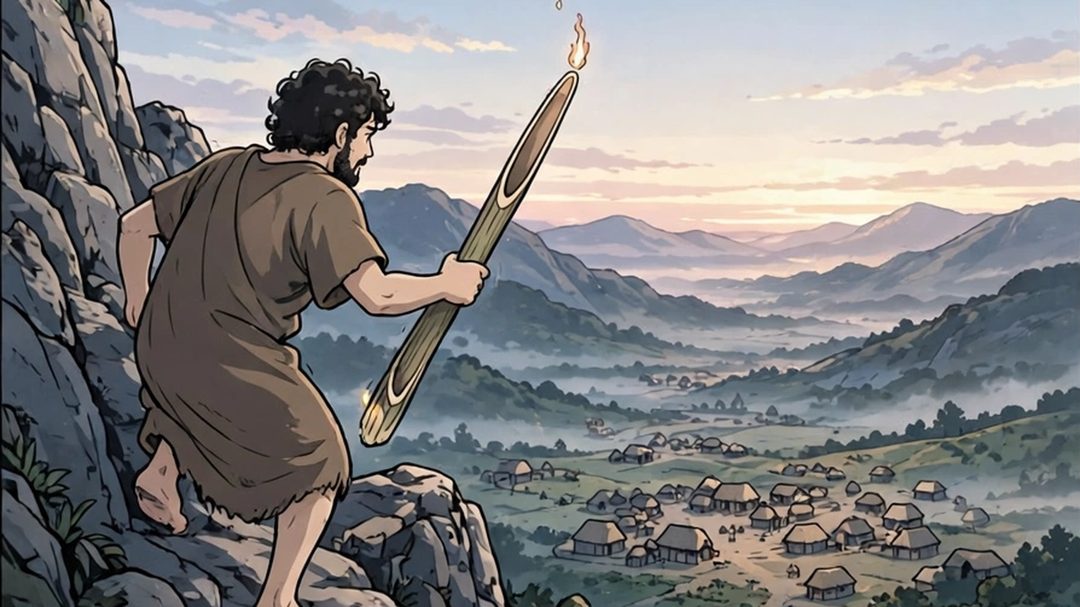
So he stole fire. He hid a spark of it inside a hollow fennel stalk, and carried it down from heaven to the world of men. With that one gift, everything changed: warmth, light, cooked food, worked metal. Civilization itself begins with a stolen flame.
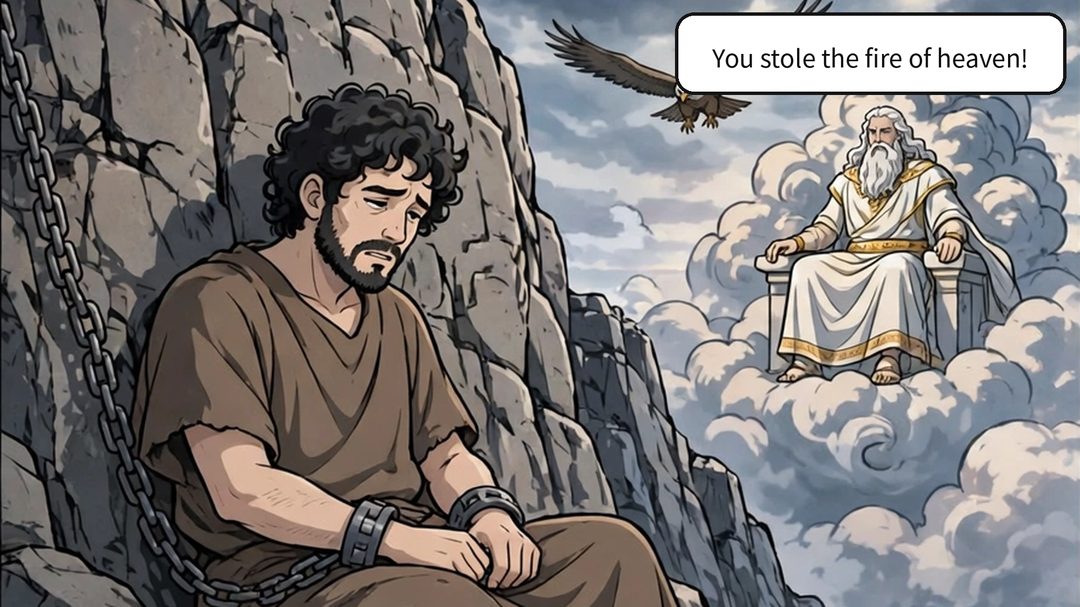
When Zeus saw fires burning on the earth below, his anger was terrible. Prometheus was seized and chained to a crag at the edge of the world. And every day an eagle came, and tore at his liver, which grew back each night, so the torment could begin again. He would hang there for ages, until a hero, Heracles, at last shot the eagle down. But that is a story of its own.
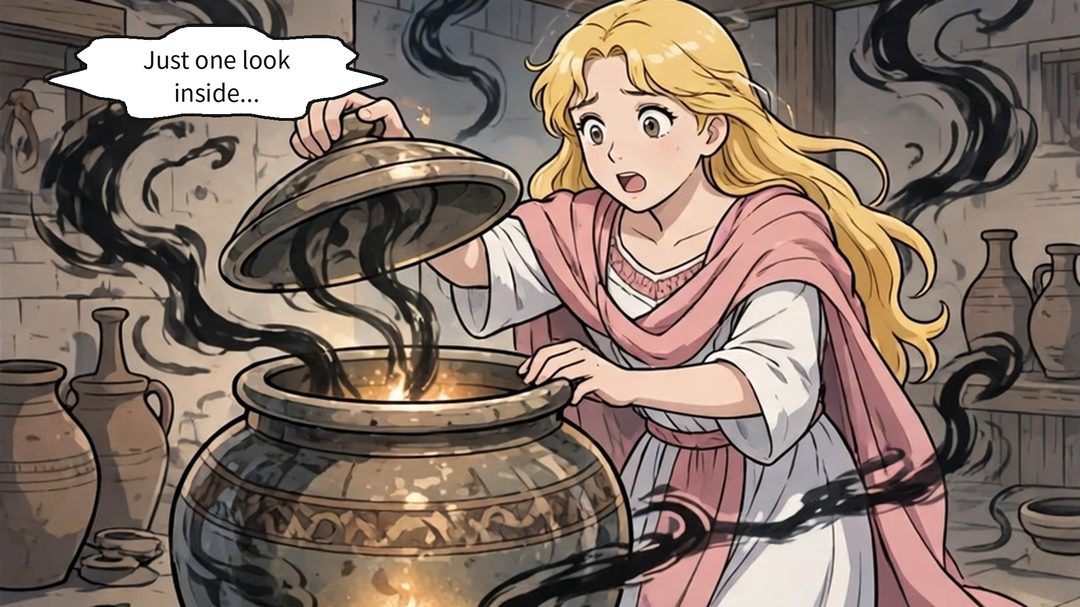
Zeus's revenge on mankind was subtler. He ordered the gods to fashion a creature of irresistible beauty: the first woman, Pandora, whose name means All-Gifts, for every god gave her one. She was sent down as a bride for Prometheus's brother, Epimetheus, Afterthought, who had been warned never to accept a gift from Zeus. He accepted her anyway.
In their house stood a great jar. And one day, Pandora lifted the lid. Out flew every evil that now plagues the world: sickness, sorrow, toil, and age. Only one thing stayed behind, caught under the rim of the jar: Hope. That is why, the Greeks said, whatever evils are abroad in the world, hope is the one thing that never leaves us.
The Age of Heroes
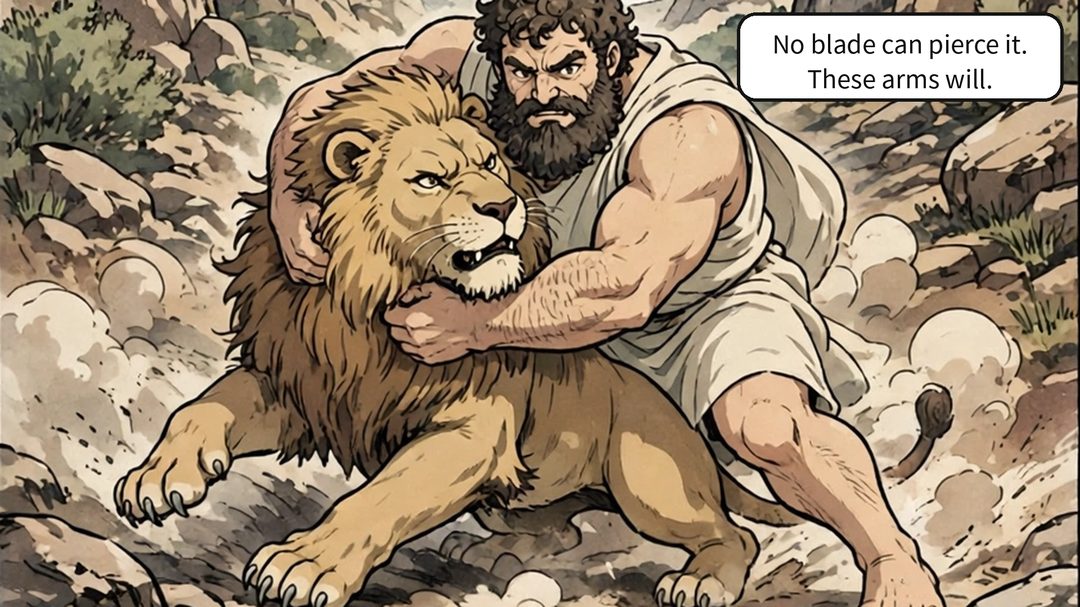
Generations passed. And between the gods and ordinary men there arose a race of heroes, half mortal, half touched by the divine. The greatest of them was Heracles, son of Zeus, whose strength no monster could withstand. Driven by guilt for a terrible crime, he served a lesser king for twelve years, and performed twelve impossible labors. The lion no blade could wound.
The many-headed Hydra. The hound of the underworld itself, dragged up alive into the daylight.
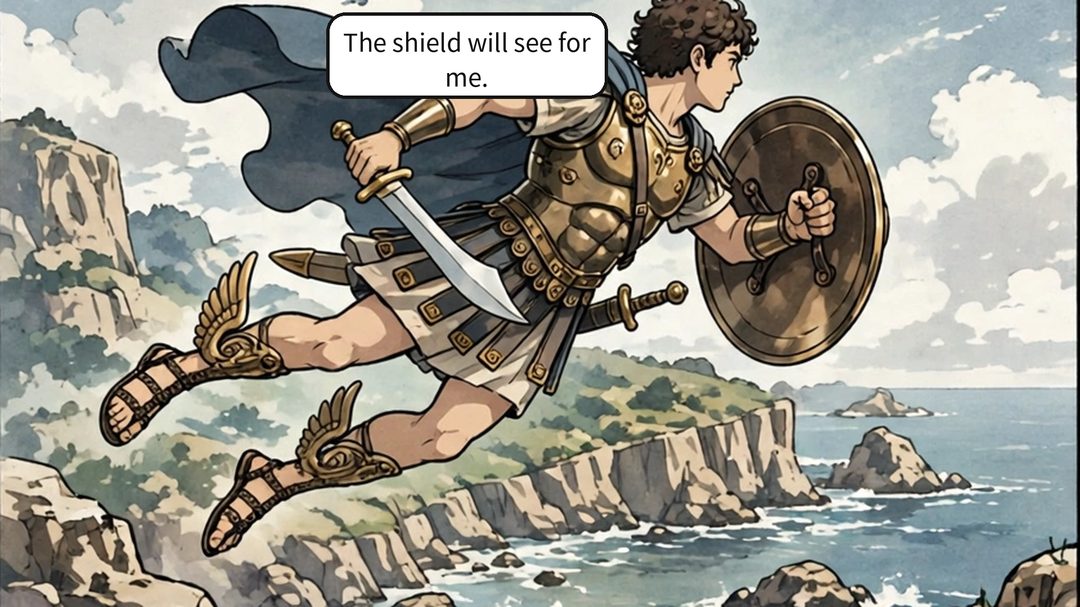
There was Perseus, sent on a mission meant to kill him: to bring back the head of Medusa, whose gaze turned men to stone. With winged sandals, a mirrored shield, and the gods' own gifts, he struck without ever meeting her eyes. And flying home, he saw a princess chained to a rock by the sea, and rescued her from a monster of the deep. Her name was Andromeda.
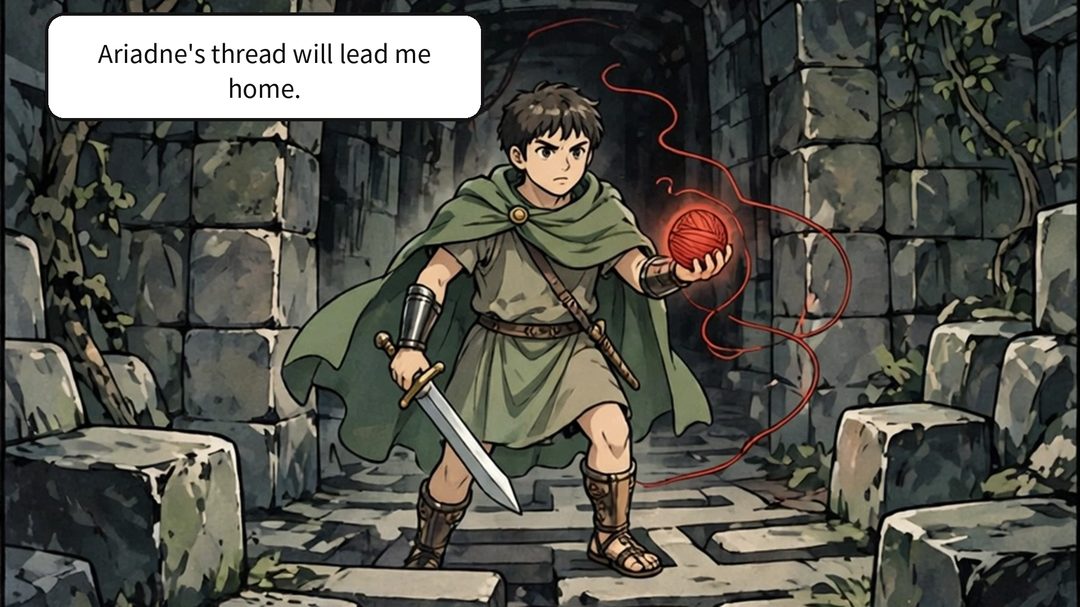
There was Theseus of Athens, who sailed to Crete to face the Minotaur, half man, half bull, hidden at the heart of a labyrinth. The king's daughter, Ariadne, gave him a ball of thread, so that he could find his way back out of the maze. He killed the monster in the darkness, followed the thread to daylight, and freed his city from its tribute of young lives.
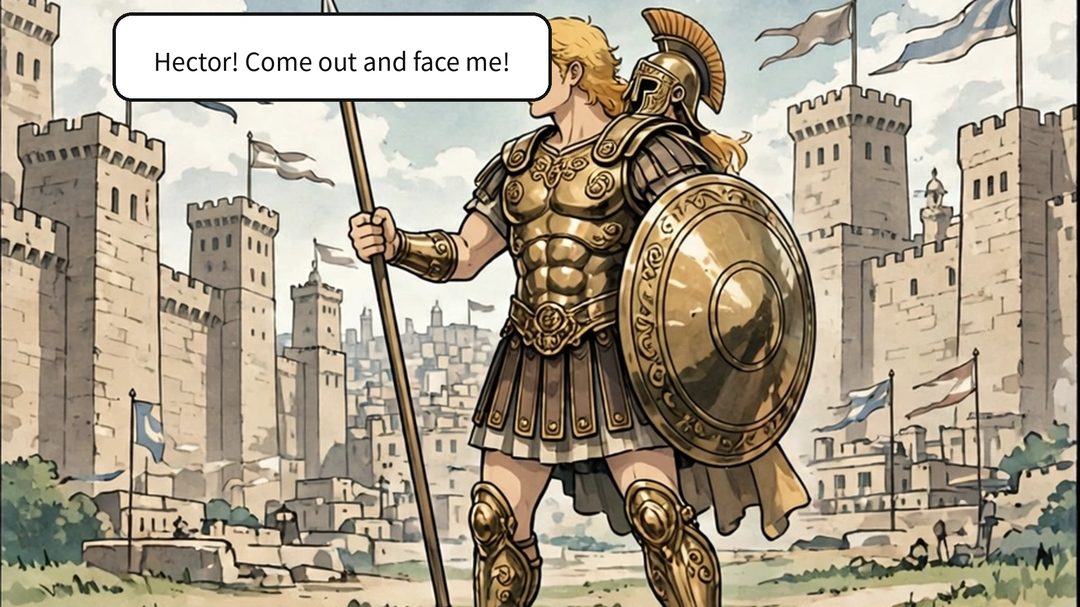
And greatest in glory, if not in years, was Achilles, the swift-footed warrior of the Trojan War. When his friend Patroclus fell, Achilles returned to battle in grief and rage, and faced Hector, the noblest prince of Troy, beneath the city walls. He knew the bargain of his life: a long life in obscurity, or a short one, crowned with undying fame.
Achilles chose the fame.
The Trojan War and the Long Way Home
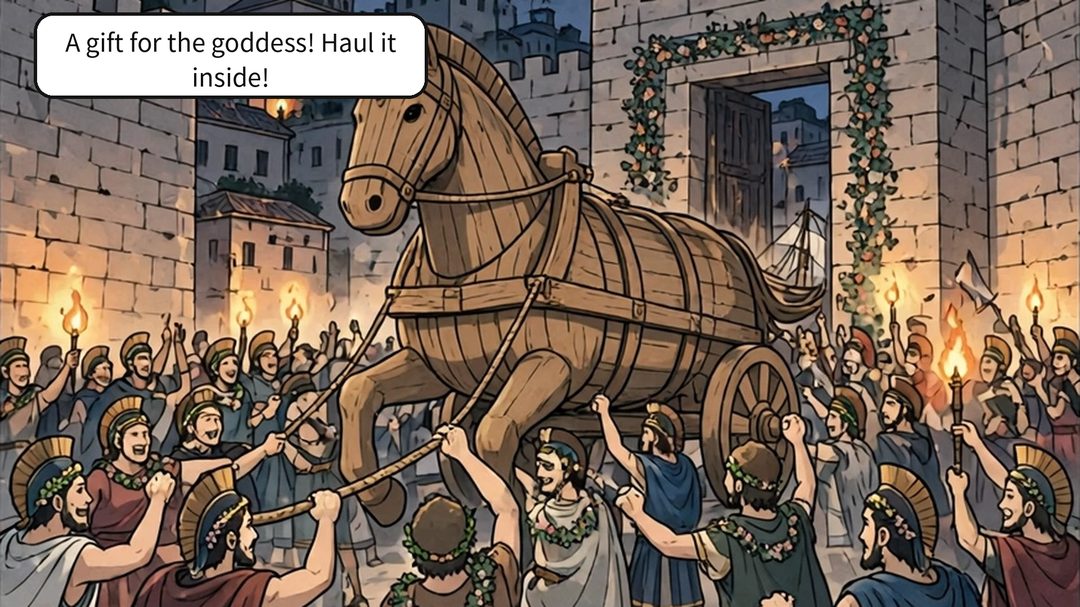
All these hero tales gather, at last, around one great event: the ten years' war beneath the walls of Troy. Kings and heroes from every corner of Greece sailed in a thousand ships, to win back Helen, the most beautiful woman in the world. For nine years, force could not take the city. In the tenth year, Odysseus, the man of twists and turns, turned to a trick.
The Greeks built a gigantic wooden horse, hid their best warriors inside it, and pretended to sail away. The Trojans, rejoicing, dragged the horse inside their own gates as an offering to the gods. That night, the hidden warriors climbed down, and Troy fell.
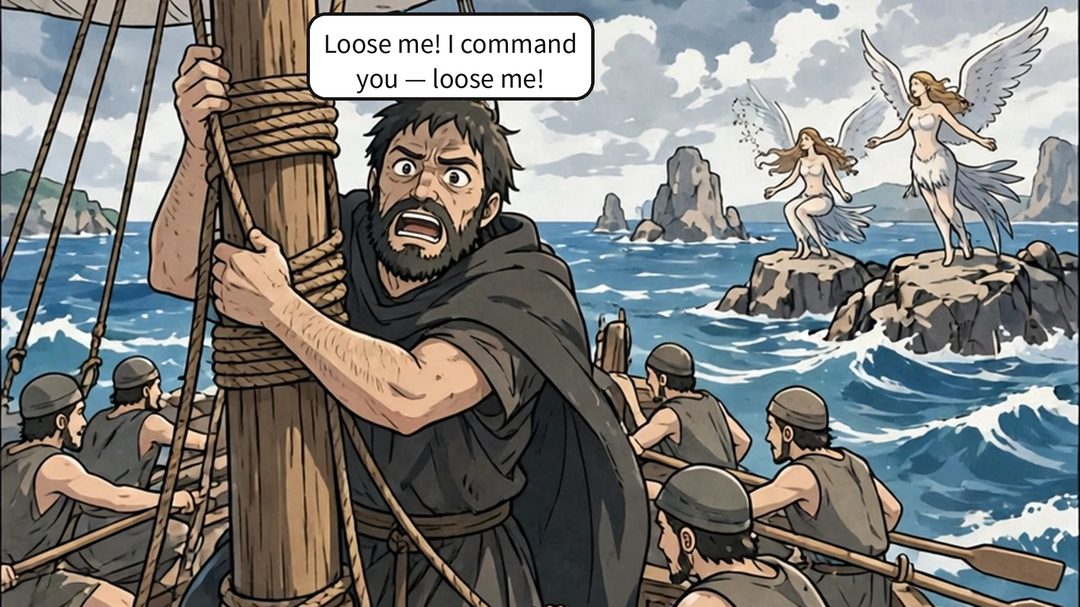
But for Odysseus, the war was only half the journey. His voyage home took another ten years, and it is the most famous homecoming in all literature. He faced the one-eyed Cyclops, and escaped by calling himself Nobody, so the giant's cries for help made no sense to his neighbors. He sailed past the Sirens, whose singing lured sailors to their deaths.
He had his men bind him to the mast, so he alone could hear the song, and live. Storms, monsters, and angry gods stripped him of every ship and every companion, until he returned home alone, in disguise, and ten years an old man.
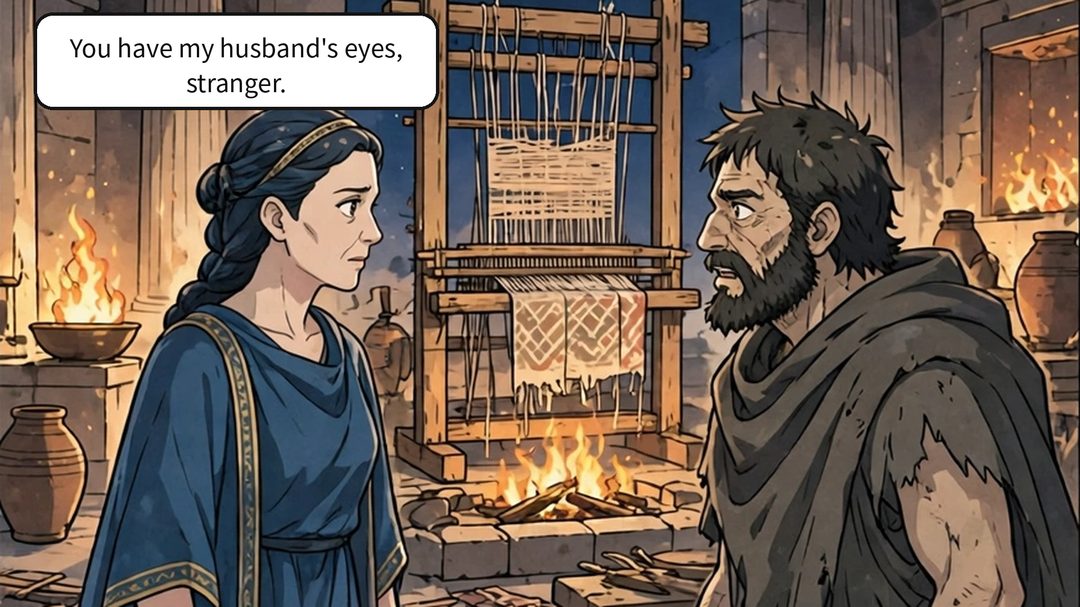
At home, his wife Penelope had waited twenty years, weaving by day and unravelling by night, to hold off the suitors who crowded her hall. Unknown to them all, the beggar at the door was Odysseus himself, testing the loyalty of his own household. And when the time came, he strung his great bow, a feat no suitor could perform, and took back his house, his wife, and his name.
How the Myths Live On
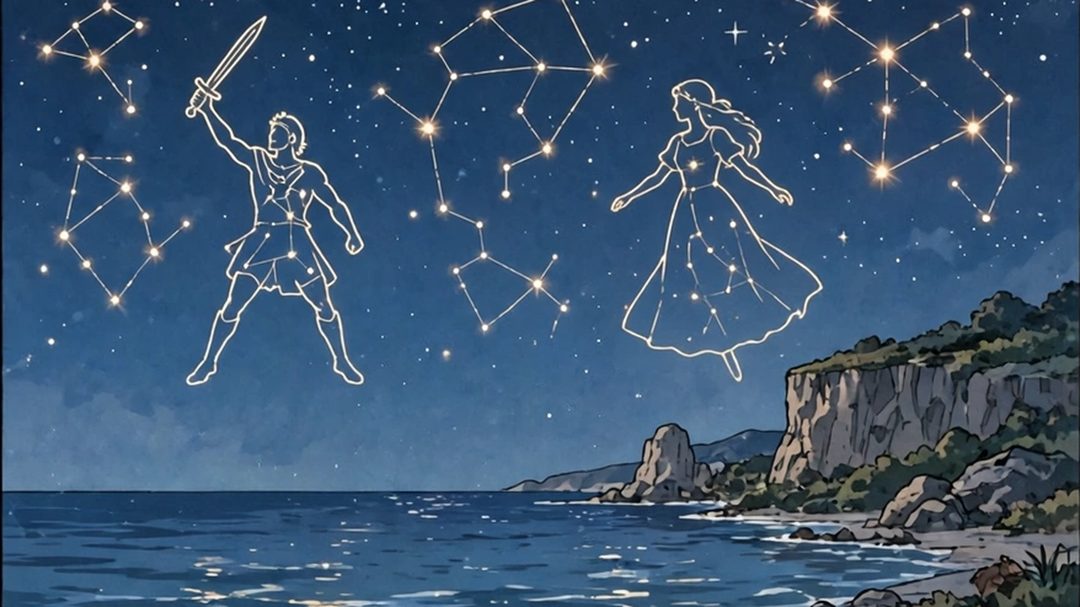
The heroes have been gone for three thousand years. But look up on a clear night, and some of them are still there. Perseus still flies across the autumn sky, and beside him shines Andromeda, the princess he rescued, spread out in her own constellation. Not far away are her mother Cassiopeia on her throne, and her father Cepheus: a whole family set among the stars.

The myths survive in quieter ways, too: in the words we still use every day, often without knowing it. The nymph Echo, who could only repeat the last words spoken to her, gave us the word echo. Beautiful Narcissus, who fell in love with his own reflection, gave us narcissus the flower, and narcissism. And when sudden, groundless fear strikes in wild places, we still call it panic, after Pan, the wild god of the lonely hills.
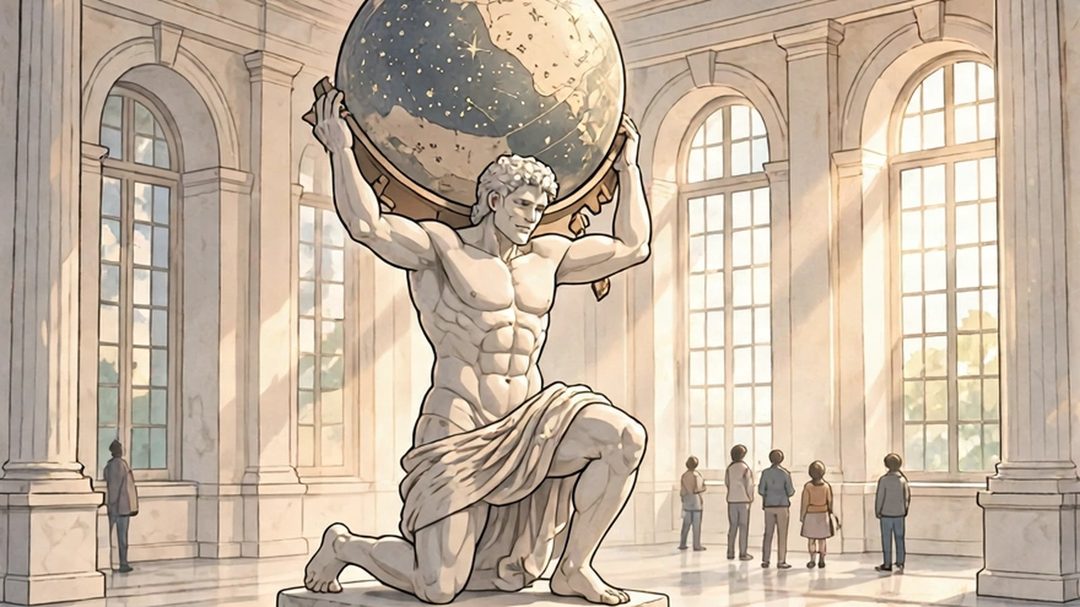
Atlas, condemned to carry the sky, now carries the world in a different way: his name sits on every book of maps ever printed. Even the word chaos, with which our story began, is the very word Hesiod used, three thousand years ago.
Why do these stories last? Because the Greeks used them to ask the questions we still ask. Why is there suffering in the world? Why do we hope? What makes a hero: strength, cleverness, or loyalty? Every myth is an answer, still arguing with the others.
That is the map of Greek mythology: from chaos, to kingship, to fire, to heroes, to us. And every figure you have met tonight has a full story of their own, waiting to be told.
About the Sources
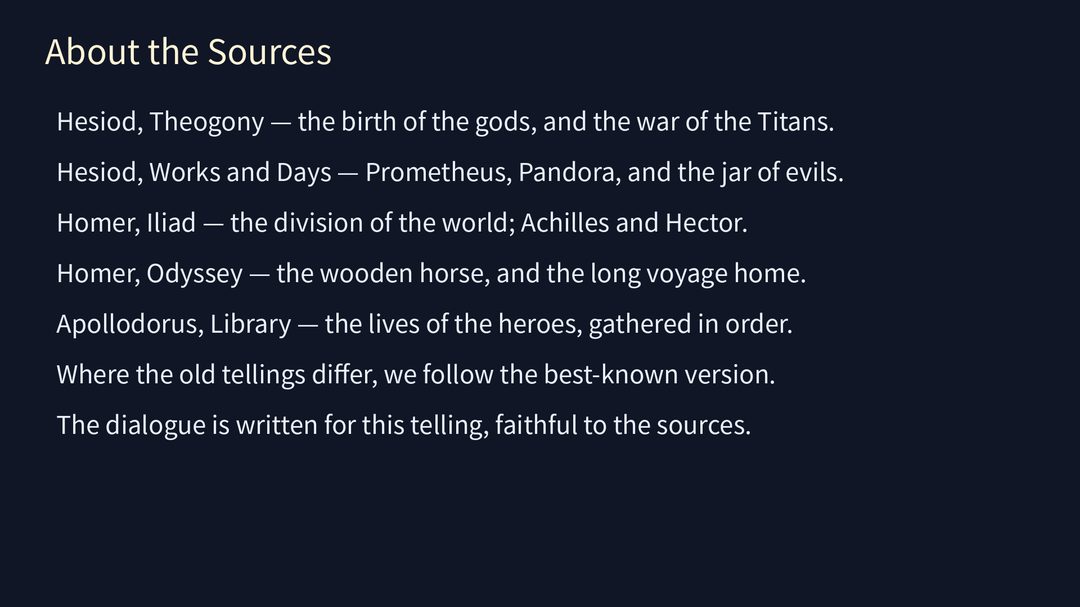
Before we close, a word about where all of this comes from. The birth of the gods and the war of the Titans follow Hesiod's Theogony. Pandora's jar comes from his Works and Days. The division of the world is Poseidon's own account in Homer's Iliad, and the homecoming is Homer's Odyssey. The heroes' lives are gathered in the Library of Apollodorus.
Where the old tellings differ, we have followed the best-known version, and said so. The dialogue in each scene is written for this telling, faithful to what happens in the sources.
In Summary
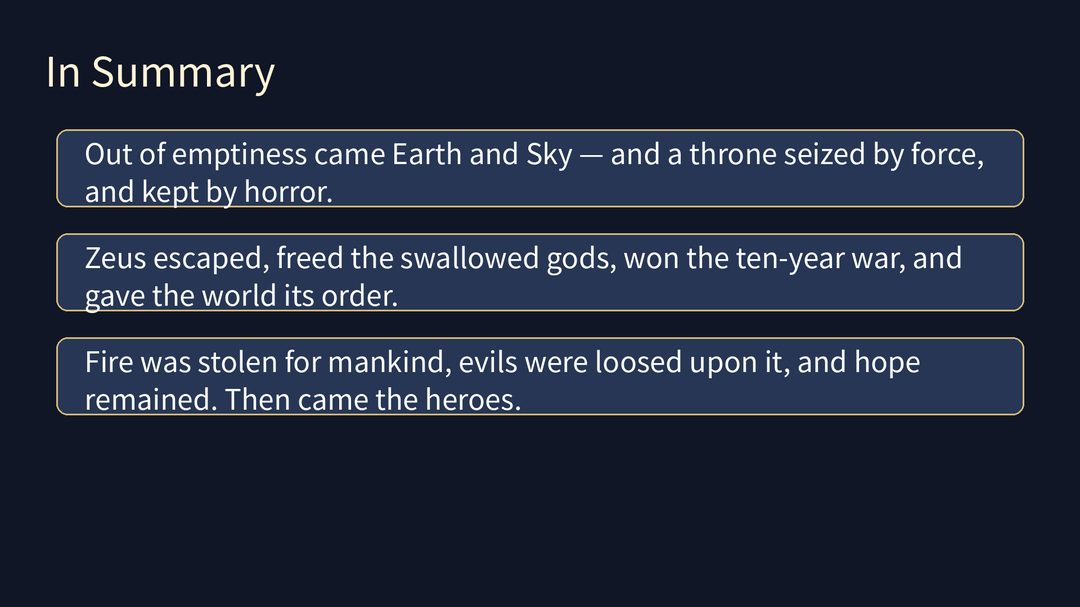
To sum up: out of emptiness came Earth and Sky; their youngest child seized the throne by force, and nearly kept it by horror. His own youngest son escaped him, freed the swallowed gods, and after ten years of war, built an order that still shapes our imagination. Fire was stolen for us, evils were let loose upon us, and hope remained. And in the age that followed, heroes walked the earth.
Heracles, Perseus, Theseus, and Odysseus: their full stories are on this channel, and more are coming.
Sources and basis
Sources
- Hesiod, Theogony — the birth of the gods and the making of the world.
- Hesiod, Works and Days — the jar of evils and the ages of mankind.
- Homer, Iliad and Odyssey — the wrath of Achilles and the long voyage home.
- Apollodorus, Library — the gathered account that ties the myths together.
Variants and notes
- Where the ancient sources disagree (for example, how Cronus was made to give up the children he swallowed), this telling follows one main version and says so in the sources section.
- The speech-bubble dialogue is original writing that keeps the meaning of the ancient scenes.